
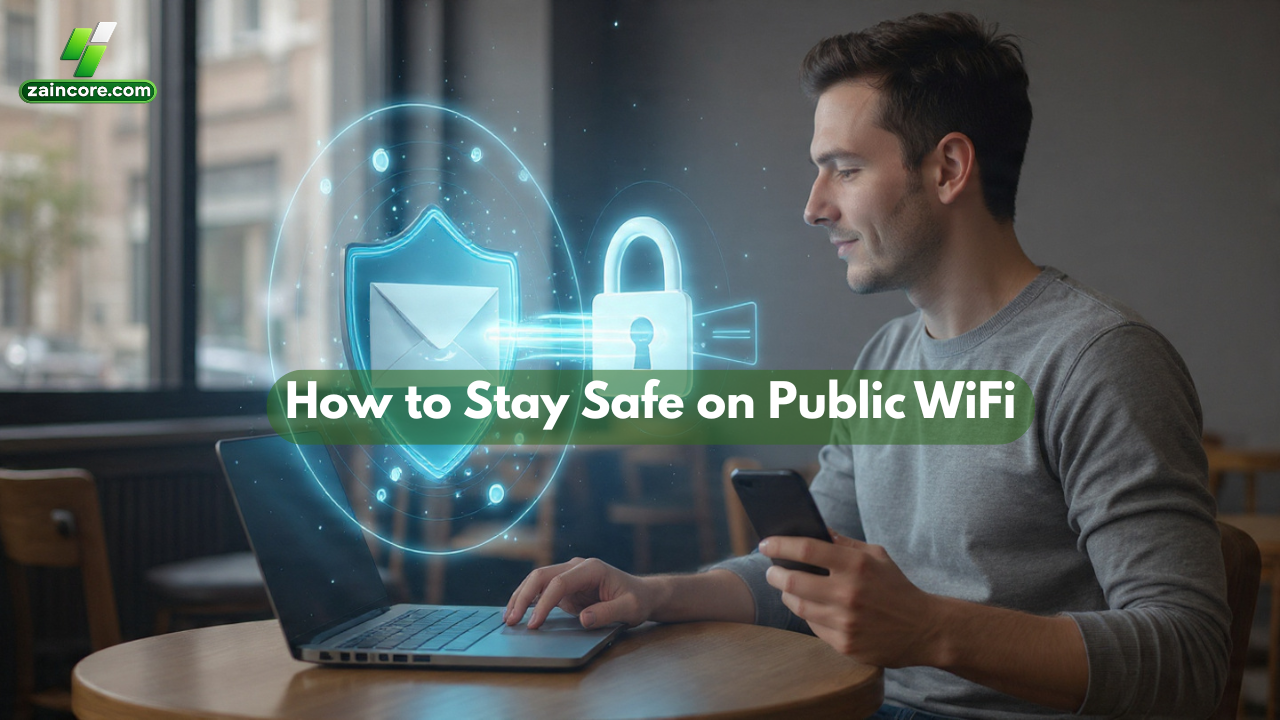
A beginner-friendly guide to protecting your data anywhere
Free public WiFi feels convenient — cafés, airports, hotels, malls, libraries.
You connect in seconds and start browsing without using mobile data.
But here’s the truth most people don’t realize:
Public WiFi is one of the easiest ways for your personal data to get stolen.
The good news?
👉 You don’t need to stop using public WiFi.
You just need to use it smartly.
This guide explains simple, practical steps anyone can follow to stay safe on public WiFi — no technical skills required.
What Is Public WiFi?
Public WiFi is any wireless internet network that:
- Is open or shared
- Doesn’t require personal authentication
- Is used by many people at the same time
Common examples:
- Coffee shops
- Airports
- Hotels
- Shopping malls
- Restaurants
- Public transport stations
Because these networks are open, they’re also vulnerable.
Why Public WiFi Is Risky
On public WiFi, your data often travels unencrypted.
This means:
- Other users on the same network may see your activity
- Hackers can intercept data
- Fake WiFi networks can trick you
Public WiFi isn’t dangerous by itself — using it carelessly is.
Common Risks of Public WiFi
1. Data Interception (Man-in-the-Middle Attacks)
Attackers position themselves between you and the website you’re visiting.
They can:
- Read messages
- Steal login details
- Capture personal information
2. Fake WiFi Networks (Evil Twin Attacks)
Hackers create WiFi names like:
- “Free Airport WiFi”
- “Cafe Guest Network”
You connect — and unknowingly give them access to your data.
3. Malware Injection
Some attackers push malicious software onto devices connected to open networks.
This can:
- Track you
- Steal data later
- Slow down your device
4. Account Hijacking
If you log into accounts on unsecured WiFi, attackers may steal:
- Passwords
- Session cookies
- Access tokens
Once stolen, they can log in as you.
The Golden Rule of Public WiFi
Never treat public WiFi like your home network.
Once you follow that mindset, everything else becomes easier.
1. Avoid Sensitive Activities on Public WiFi
This is the most important rule.
Avoid doing this on public WiFi:
- Online banking
- Payments
- Shopping checkouts
- Accessing work systems
- Entering passwords on unknown sites
If it’s important or sensitive — wait or use mobile data.
2. Always Check for HTTPS (Very Important)
Before entering any information, look at the website address.
Safe websites:
- Start with https://
- Show a 🔒 lock icon
Unsafe websites:
- Start with http://
- No lock icon
HTTPS encrypts data between you and the website.
📌 Never log in on sites without HTTPS, especially on public WiFi.
3. Turn Off Auto-Connect to WiFi Networks
Many devices automatically connect to saved networks.
This is dangerous because:
- Fake networks may use the same name
- Your device may connect without asking
What to Do:
- Disable “Auto-connect”
- Forget unused public networks
- Manually connect only when needed
4. Use Mobile Data for Important Tasks
Mobile data is usually:
- Encrypted
- More secure
- Harder to intercept
If you need to:
- Log into email
- Make payments
- Access important accounts
👉 Switch to mobile data temporarily.
It’s worth the extra data usage.
5. Don’t Share Files or Enable File Sharing
On public WiFi:
- File sharing can expose your device
- Others may access shared folders
Stay Safe By:
- Turning off file sharing
- Keeping Bluetooth off
- Disabling device discovery
Less visibility = less risk.
6. Keep Your Device Updated
Updates fix security holes hackers exploit.
Always keep updated:
- Operating system
- Browser
- Apps
Outdated software is an easy target on public networks.
7. Use Strong Passwords (And Never Reuse Them)
If one account is compromised:
- Reused passwords = multiple hacked accounts
Best Practice:
- Use unique passwords
- Prefer long passphrases
- Enable two-factor authentication
Even if a password leaks, 2FA can save you.
8. Be Careful With Pop-Ups and Login Pages
On public WiFi, attackers may redirect you to:
- Fake login pages
- Fake update prompts
Warning Signs:
- Unexpected login requests
- Pop-ups asking for credentials
- Sudden “security alerts”
If unsure — close the page.
9. Log Out After Using Accounts
Don’t stay logged in on public WiFi.
After finishing:
- Log out of accounts
- Close browser tabs
- Clear session if possible
This reduces risk if someone intercepts session data.
10. Disable WiFi When You’re Done
Leaving WiFi on means:
- Your device may reconnect automatically
- Background apps may keep syncing
Turn WiFi off when not actively using it.
Simple habit — big protection.
11. Be Extra Careful on Public Computers + WiFi
If you’re using:
- Hotel business centers
- Library computers
Never:
- Save passwords
- Check “remember me”
- Access sensitive accounts
Public computers + public WiFi = double risk.
Common Myths About Public WiFi
❌ “I only browse, so I’m safe”
✔ Browsing can still leak data
❌ “Hackers only target important people”
✔ Attacks are automated
❌ “Free WiFi is always safe”
✔ Free ≠ secure
Quick Checklist: Staying Safe on Public WiFi
✔ Avoid banking and payments
✔ Use HTTPS websites only
✔ Turn off auto-connect
✔ Disable file sharing
✔ Keep devices updated
✔ Use strong passwords
✔ Log out after use
✔ Turn WiFi off when done
When Is Public WiFi Okay to Use?
Public WiFi is generally fine for:
- Reading news
- Watching videos
- Checking non-sensitive information
Just avoid anything involving:
- Money
- Passwords
- Personal data
Final Thoughts
Public WiFi is not your enemy.
Careless habits are.
You don’t need fear — you need awareness.
By following these simple rules:
- You reduce risk dramatically
- You protect your data
- You stay in control
Remember this one line:
If you wouldn’t do it in public, don’t do it on public WiFi.